
Let Them Play: Why Saying Less on the Sidelines Helps Kids Thrive in Sport
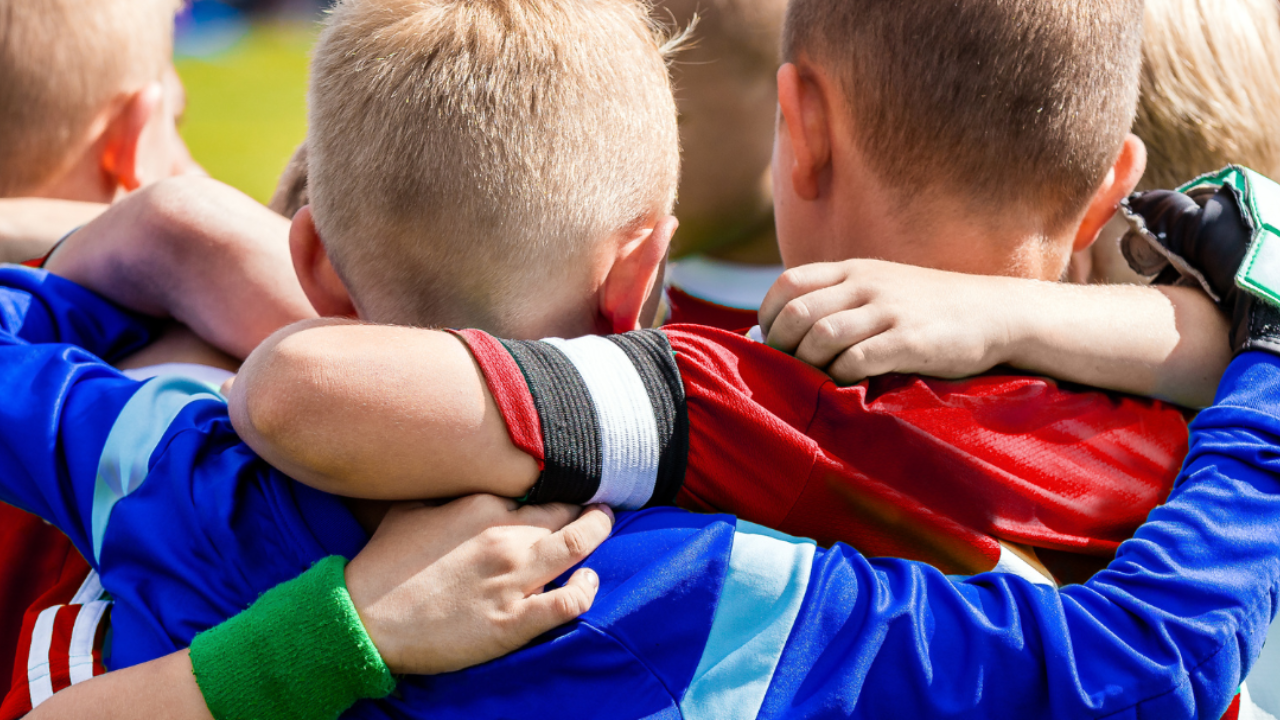
If you’ve ever found yourself pacing the sidelines, gripping your coffee a little too tightly, or shouting a well-intentioned “watch the ball!”—you’re not alone. As a mum of four boys, I’ve had my fair share of moments where I was way too into my child’s game. But over the years, I’ve learned something surprising: the less I say, the better my kids play.
At first, I thought my enthusiasm was helpful. Cheering loudly, giving advice mid-game, offering feedback on the car ride home—it all came from a place of love and wanting my kids to do their best. But as time went on, I noticed something. When I dialled down the intensity and let them take the lead, they actually played with more confidence, enjoyed the game more, and performed better.
And then, I took up a sport myself. I quickly realised how hard it is to focus when people are shouting from the sidelines. It’s distracting, overwhelming, and—if I’m honest—a little annoying. Kids feel the same way.
The Changing Landscape of Youth S...
Why Sibling Fights Are Actually a Good Thing (Yep, Really!)

Constant bickering, snatching toys, accusations of "that's not fair!" It’s exhausting and makes us worry our kids will never get along.
Parents everywhere always want to know "How do I make them stop fighting?" But what if we flipped the script? What if, instead of seeing sibling fights as a problem to eliminate, we viewed them as a crucial opportunity to build lifelong skills?
The Secret Benefit of Sibling Fighting
Children learn conflict resolution by having conflict. It’s that simple. Sibling fights (and for kids who don’t have siblings fights with cousins, neighbours, and friends) provide a safe training ground for navigating disagreements, handling strong emotions, and understanding different perspectives. Without these early experiences, kids may struggle to handle conflict in friendships, school, and eventually, the workplace or their own families.
Instead of aiming for a fight-free home (which, let’s be honest, is unrealistic), our goal should be helping kids fight better. ...
Can't Finish a Sentence? Try the ‘Squeeze Technique’ – The 1-Second Hack That Stops Interruptions

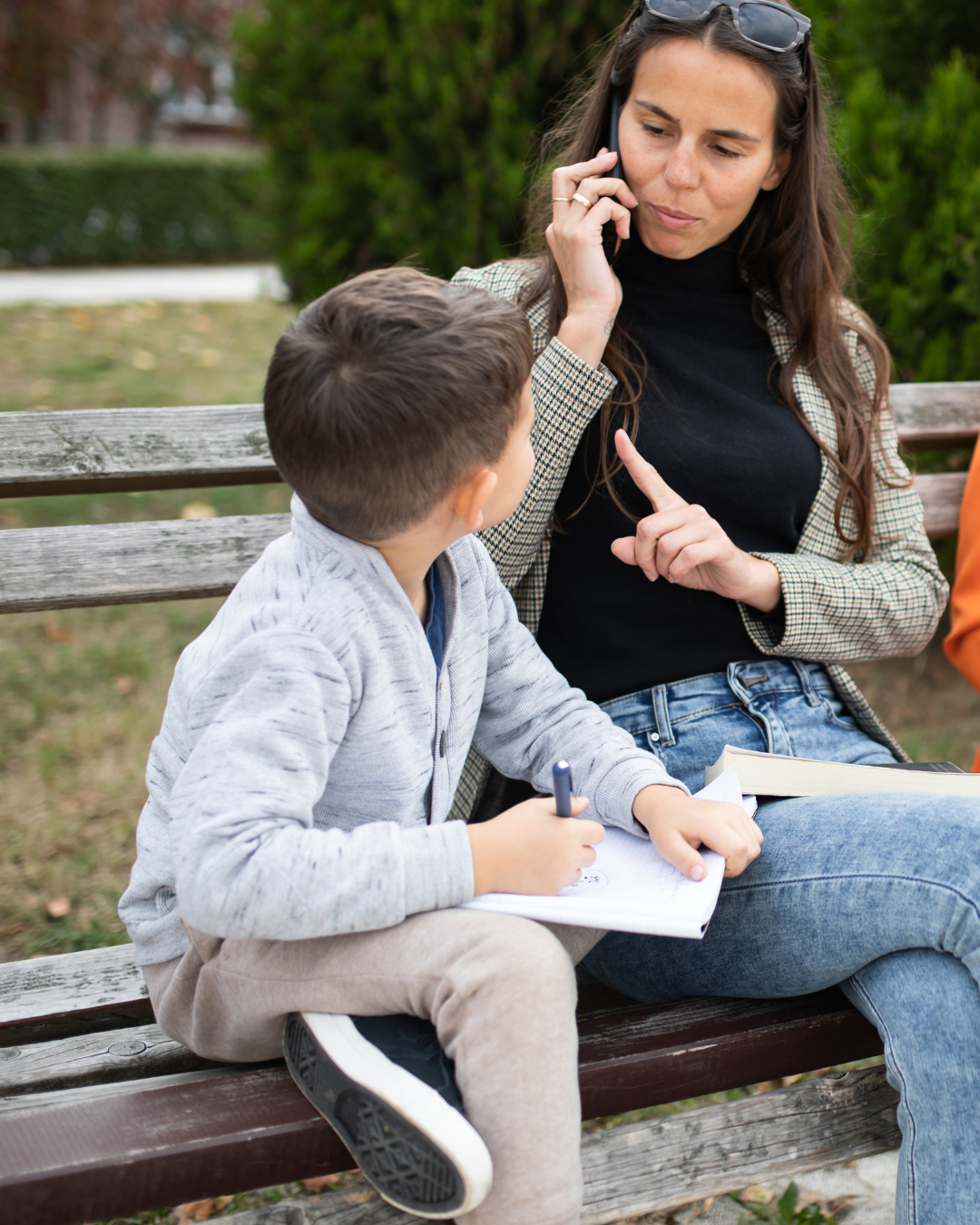
You’re mid-conversation with another adult, deep in thought, finally managing to connect with another grown-up when—“Muuuum!” or “Daaad, look at this!”—you’re interrupted for the hundredth time. Sound familiar?
If your child has a habit of cutting in just when you’re talking, don’t worry—there’s a simple yet powerful way to teach them patience and respect without frustration or constant shushing. It’s called the Squeeze Technique, and it might just change your life.
The Problem with Constant Interruptions
Kids are wired to seek immediate attention. Their world moves fast, and when they have something to say, they feel like it must be said now. This is developmentally so normal for kids but it’s something that can get pretty frustrating for parents. It can either feel like you can’t finish a sentence or you wind up snapping because it gets too much.
So how do you get a word in but also help kids to feel seen? Enter the Squeeze Technique.
What is the Squeeze Technique?
Instead of...
How to support your kid with friendships

Some children thrive in the playground and make friends easily. For other kids, friendships are tricky to navigate.
When your child comes home sad about the fact that no one played with them today, or that someone was unkind to them, we feel their pain viscerally and it can feel like our own heart might just break in two.
The thought of our kids feeling left out or hurt emotionally without anyone there to help them can light a fire under us. We want to jump into action - call the school, drill our kid to find out the names of the kids who did this, or dive into a monologue of advice about ‘playing with someone else’.
While these responses come from a place of love and protectiveness for our child, they are often more about how we are feeling than our kid.
The truth is all kids will have days where things don’t go right in the playground and not all of these struggles need a parent to intervene. But what point do you step in, and what should you do to support your child’s friendship...
When your kid is a ‘joy to have in class’ and tornado of big feelings at home - After school restraint collapse

When one of my boys was in Kindy I would check in with his teacher to see how he was going and hear nothing but positive reviews.
Apparently, he was a “joy” to have in class. His teacher wished more kids were as attentive and quiet......
I wondered if she had the kids mixed up because his behaviour and emotions at home was off the charts difficult. He was picking on siblings, struggling at afterschool playdates with neighbours and falling apart over dinner he would normally have loved.
What was happening with my son is called after-school restraint collapse and it’s common at the beginning of the new school year as kids are all adjusting to new things.
What’s really happening here is our child working so hard to keep it together away from their parents all day long. At childcare or school, they need to share, take turns, listen and follow directions. They are also away from us; their safe base and it can take time to settle.
This collapse is happening more these days
The after-...
Separation Anxiety - When a good ‘goodbye’ is just too hard

Separation is tough for kids.
As a mum to four boys I have had my fair share of tricky farewells and I am no stranger to bursting into tears in the carpark after yet another awful drop off.
When my youngest son started kindy, he was struggling with drop off. He would start to delay or struggle from the minute he woke, cling to the inside of our van and beg for a day off, he would cry at the gate in front of EVERYONE.
We talked about how saying bye to mum was hard and we workshopped what might help.
He came up with an idea that brining his beloved ‘Sonic toy’ with him to the gate would help. He wanted me to mind it for him and then bring it back at pick up. We went to the gate with Sonic for two weeks before my son stopped asking for him and was able to go into school without anything. He’s never looked back.
While this may seem ‘too simple’ the reason this worked is well documented. My son’s behaviour of struggling to separate as he adjusted to kindy and needing a transitional obj...
Back to school feelings - Six tips to ease kids’ emotions as they go back into school.

Most kids in Australia are going back to school in just over a week.
The shift from the long Aussie summer holidays into the back-to-school routine can be tough for children and let’s be real here - their parents too!
Beyond adjusting to new routines, the transition back to school involves a mix of emotions. Some kids might feel excited about new teachers, subjects, and classmates, while others may experience anxiety, sadness or uncertainty about the upcoming school year.
This can be exacerbated if there is significant change happening like starting school for the first time, starting high school, or moving to a new school. In times of transition kids are more likely to have big feelings about seemingly small things because there is a lot to process.
Things can be harder when kids experience social struggles or anxiety, if they are neuro divergent, or if they find the environment of school overwhelming to the senses. The below helps with the return to school for all kids, however s...
How to parent this Christmas without the threats and bribes

“If you kids don’t knock it off I’m calling Santa” is the calling card of many patents at this time of year.
Are you even a parent if you haven’t said at least one of these things:
“If you don’t settle down, we are turning this car around”
“if you don't eat your dinner there will be no dessert” or
“Santa is just a phone call away”
My hubby used the Santa one this week. One of my boys was mucking up and he said “if you don’t settle down Santa won’t get as many gifts.” Most parents dabble in these thinly veiled threats, especially at Christmas when everyone is heightened.
We use these things to get our kids to cooperate.
To get kids into or out of the bath, or just some days to survive. Sometimes they do work in the moment.
But there is a significant catch, they simply don’t work to teach our kids HOW to do things differently and as a result we wind up on a treadmill of threats and rewards that quite frankly gets exhausting.
In addition, threats and punishments simply don’t ad...
To the parents of the biter… I promise it’s going to be ok.

My eldest was a biter…. Among other things.
He was also a hitter, a pusher, and a snatcher.
I once got a call from his small preschool that he’d pushed 15 small children over.
My son was two. His lovely teacher Emily had announced to the class there was a ‘real rabbit’ for them all to look at to celebrate Easter at the front of the room. My son was so excited he tore his way to the front of the class, pushing past everyone and 15 children were left crying in his wake. The teacher said, ‘she’d never seen anything like it’.
Unfortunately this wasn't a stand alone incident. My son tended to struggle to share in the sandpit at preschool, and also at home playing with his cousin. Hitting, pushing and biting were happening more often than I felt i'd been warned about in the baby books.
It never feels good when your child is hurt by another child, but it feels just as awful when you are the parent of the child who has hurt someone. I felt awful. I felt extremely worried he was destined ...
Don’t steal their struggle - Building frustration tolerance in kids through play

The photo below was taken of my kids 8 years ago.
A moment that will be etched in my brain forever because of both the beautiful magic of it....and the horrible chaotic-ness of it all in one.
It’s etched in my brain because I was finally out of the trenches of having my fourth baby. He’s pictured here at bottom of shot finally at that beautiful age where he could start to join in, and life was getting a bit less hectic.
But this moment was really special for me because it was the first time all four of my boys were playing nicely together.
IT WAS PURE MAGIC.

They’d been playing with their LEGO DUPLO for about 45 mins in absolute harmony. Anyone who is a parent knows these are the moments we almost don’t want to breathe because they seem too good to be true. My boys were building a tall tower together…… TOGETHER!
There was teamwork, creativity, innovation, special skills, negotiation skills all happening at once. These moments in parenting are the ones we grab the phone and ca...
